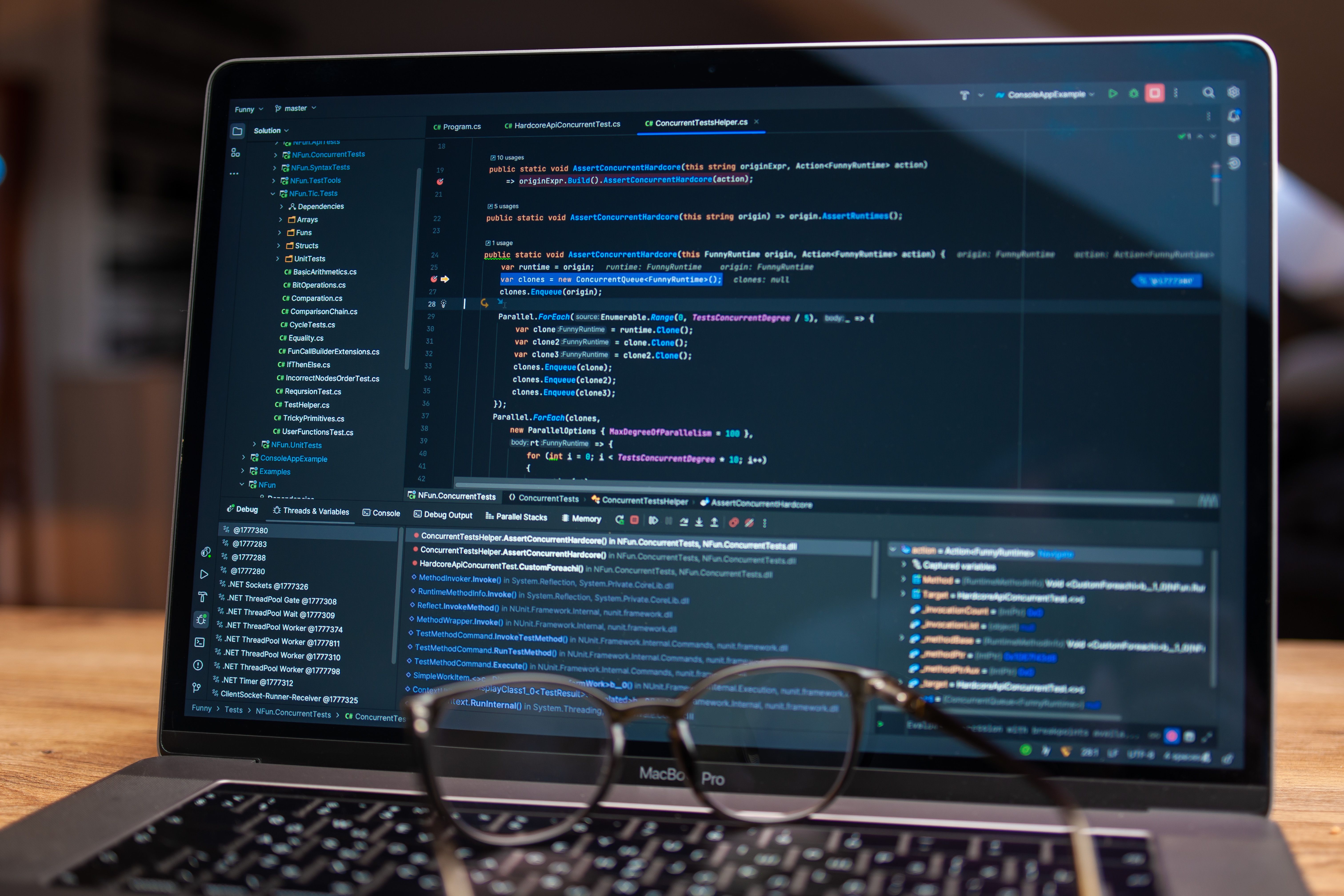
Patient engineering
On launch day, a lot of providers fade out. The software is delivered, the invoice is settled, on to the next project. We do the opposite. For us, launch isn't the end of the work: it's the beginning.
This difference isn't just a matter of taste. When software is built in a rush, the cost doesn't disappear - it gets transferred. To the user who lives with the bug. To the team that inherits the shortcut. To the client who ends up paying twice. Patient engineering means refusing that transfer: doing the work right the first time, because we know who would pay the price otherwise.
Staying is the job, not an add-on
Software you don't maintain decays. Not all at once - in small erosions. A dependency that ages. An edge case that piles up. A starting assumption that reality eventually contradicts.
Everything that matters is settled after launch: robustness, correctness, trust. It's the moment the code meets real use, real data, real people who use it in ways no one planned. Treating launch as an ending means abandoning the project just as it gets interesting.
Staying, for us, means concrete things. Going back over our own code to improve it once we know more. Answering when something breaks, instead of shrugging. Treating a project as a relationship, not a transaction.
Understanding costs less than building
The most tempting part of the craft is to write code right away. It's also the most expensive when you rush it. Most bad software is an excellent answer to the wrong question.
So we spend time where it doesn't show: understanding the work of the person in front of us, what they actually do, what slows them down, what they can't quite put into words. That time looks slow. It isn't. It saves months of careful building in the wrong direction.
Boring lasts longer
Technical fashion changes every season. A new framework promises to simplify everything, a shiny dependency saves you ten lines - and three years later, no one maintains them. Every addition is a debt taken on in the name of a future team that didn't get a vote.
We choose tools we'll still know how to run in five years. Few dependencies, and only the ones we understand. Foundations that are proven rather than promising. This isn't conservatism: it's respect for people's time, ours and that of the clients who inherit what we leave behind.
Code is read more than it's written
A line of code is written once and read hundreds of times - by whoever fixes it six months later, by the colleague who takes over the project, by ourselves once the context has faded.
So we prefer boring code to clever code. Clear names to thrifty abbreviations. A simple solution you grasp at a glance to an elegant one you have to decode. Code isn't a place to show off; it's a place others will have to live in.
Patient doesn't mean slow
One clarification, to avoid the misunderstanding. Being patient isn't polishing endlessly, putting off decisions, or piling on features no one asked for in the name of perfection. Patience misunderstood wastes as much as haste does.
Patience is knowing where to put the care. Shipping what needs to ship when it needs to, but refusing to botch the foundations we'll have to carry afterward. It's the difference between taking your time and wasting time - and it plays out in judgment, not on the clock.
The studio's bet
At bottom, the reason is simple. The software we build doesn't belong to us: it belongs to the people who use it, and to those who'll take it over after us.
Patient engineering is sometimes slower, sometimes more expensive, and we own that. The rest - speed for speed's sake, the disposable, the debt you hand off to someone else - has never seemed worth what it costs. We build things made to last, by people who mean to stay.